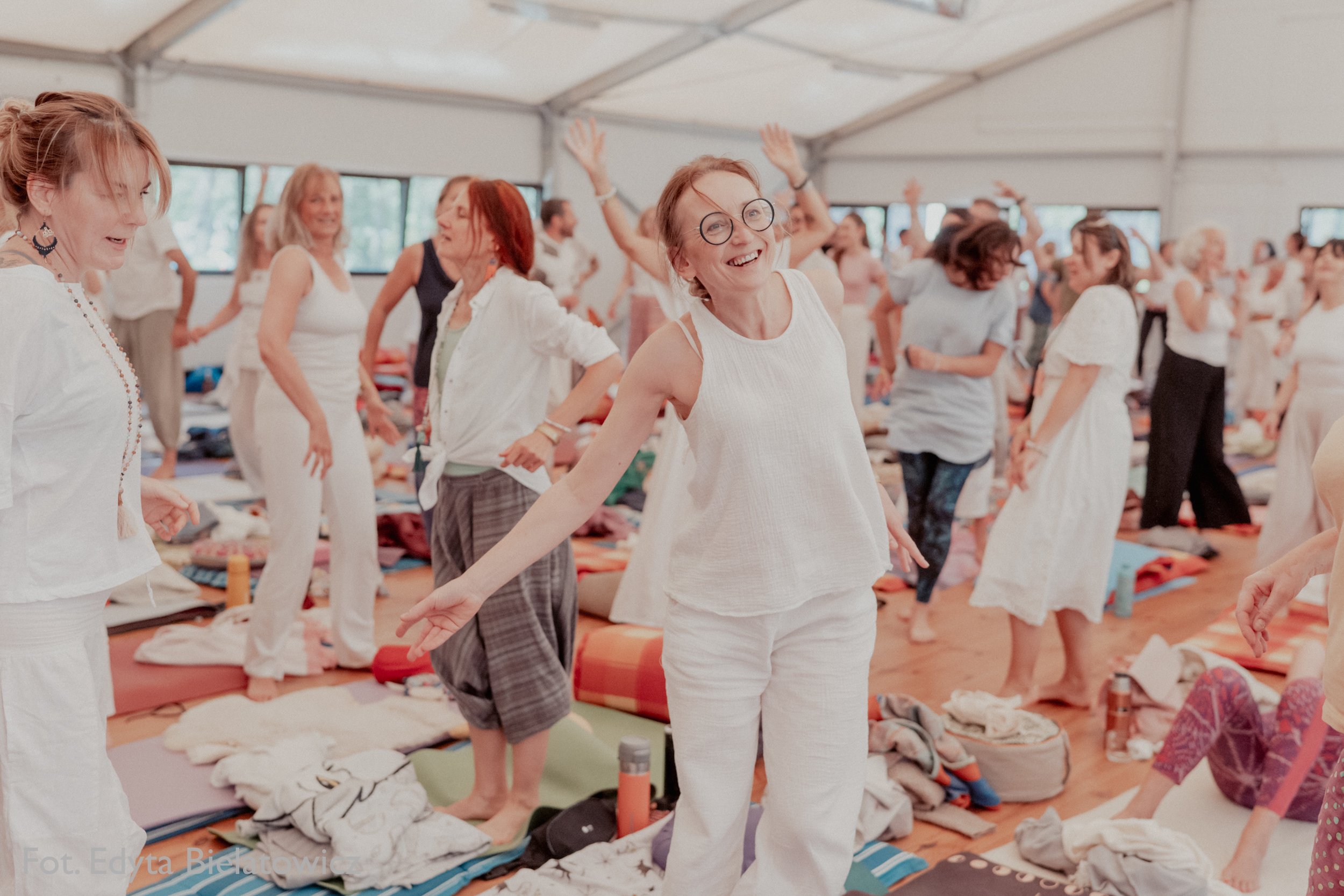
KUNDALINI YOGA


About Kundalini Yoga

Kundalini Yoga is considered the most comprehensive of all types of yoga. It includes all elements: physical exercises, meditation, prayer, and breathing techniques. The practice of Kundalini Yoga consists of many sets of exercises (kriyas), performed to achieve specific effects. It is the fastest path to achieving harmony between body, mind, and soul.

Kundalini Yoga is a science of the human being — a technology whose effects can only be experienced and understood through direct practice. The experience may be different for each of us, but it always brings positive changes on the physical, mental, and emotional levels.

It is a form of yoga that directly responds to the challenges of modern life. Kundalini Yoga is for people who live in today’s world — who have families, homes, and work — and who want to harmonize their inner and outer worlds, and benefit from this practice in a rapidly changing reality.

Regular practice brings fast and profound effects on many levels: physical, mental, and in one’s personality.

Benefits of the practice:

  • improved health (the practice stimulates circulation and supports the nervous and hormonal systems)
  • emotional balance
  • increased resilience to stress
  • inner peace and self-confidence

Kundalini Yoga can be practiced by anyone, regardless of age, background, nationality, belief, or religion. It is a heritage of humanity, now accessible to everyone. Kundalini Yoga is a practical science through which we can become healthy, happy, and fulfilled.

Kundalini Yoga is a physical and meditative discipline that combines postures (asanas), breathing techniques (pranayama), energy locks (mudras and bandhas), eye focus (drishti), and mantra chanting (naad, laya).

“Kundalini” refers to the dormant energy at the base of the spine. Through the practice of yoga, this energy rises and travels upward along the spine through the chakras, creating an overall sense of well-being and an expanded state of awareness.

The word kundalini comes from kundal, meaning “a lock of the beloved’s hair.” Uncoiling this lock symbolizes the awakening of Kundalini energy — the creative potential that exists within every human being.

Traditionally, Kundalini techniques were passed from Master to student through a long initiation process. In this system, through working with the aura, chakras, and the ten bodies, Kundalini Yoga can now be taught openly to practitioners.

    Benefits of the practice:

    • improved health (the practice stimulates circulation and supports the nervous and hormonal systems)
    • emotional balance
    • increased resilience to stress
    • inner peace and self-confidence

    Kundalini Yoga can be practiced by anyone, regardless of age, background, nationality, belief, or religion. It is a heritage of humanity, now accessible to everyone. Kundalini Yoga is a practical science through which we can become healthy, happy, and fulfilled.

    Kundalini Yoga is a physical and meditative discipline that combines postures (asanas), breathing techniques (pranayama), energy locks (mudras and bandhas), eye focus (drishti), and mantra chanting (naad, laya).

    “Kundalini” refers to the dormant energy at the base of the spine. Through the practice of yoga, this energy rises and travels upward along the spine through the chakras, creating an overall sense of well-being and an expanded state of awareness.

    The word kundalini comes from kundal, meaning “a lock of the beloved’s hair.” Uncoiling this lock symbolizes the awakening of Kundalini energy — the creative potential that exists within every human being.

    Traditionally, Kundalini techniques were passed from Master to student through a long initiation process. In this system, through working with the aura, chakras, and the ten bodies, Kundalini Yoga can now be taught openly to practitioners.

    “Yoga means the discipline of the mind and body. There is nothing mysterious about it. Yoga does not explain the meaning of life… Its purpose is to develop a quality of mind that allows one to perceive reality and gain self-awareness.”

    Yogi Bahan

    “Yoga means the discipline of the mind and body. There is nothing mysterious about it. Yoga does not explain the meaning of life… Its purpose is to develop a quality of mind that allows one to perceive reality and gain self-awareness.”

    Yogi Bahan


    Why is it worth learning Kundalini Yoga?

    Stress breaks down the body’s systems, making it more vulnerable to all forms of illness and discomfort. The huge growth of interest in yoga and meditation in the 21st century shows that people are increasingly in need of relaxation, inner peace, and physical well-being.

    The average person is exposed in one week to as much information as our ancestors would have received in an entire lifetime. Between iPhones, AI, television, the internet, radio, and constant advertising, the human psyche is continuously bombarded with information at an overwhelming pace.

    Without a buffering space for the mind, this flow of data acts like a 24/7 emotional overload, creating psychological pressure — what we commonly call stress.

    This “buffer zone” of the mind can be developed through yoga and meditation.

    With the rise of computers and the information-based economy, many of us spend hours sitting. Yoga is one of the best forms of exercise for maintaining health, as it regenerates the body through stretching and strengthening practices.

    Even a short daily practice of yoga and meditation can significantly improve physical health and mental clarity.


    Why is it worth learning Kundalini Yoga?

    Stress breaks down the body’s systems, making it more vulnerable to all forms of illness and discomfort. The huge growth of interest in yoga and meditation in the 21st century shows that people are increasingly in need of relaxation, inner peace, and physical well-being.

    The average person is exposed in one week to as much information as our ancestors would have received in an entire lifetime. Between iPhones, AI, television, the internet, radio, and constant advertising, the human psyche is continuously bombarded with information at an overwhelming pace.

    Without a buffering space for the mind, this flow of data acts like a 24/7 emotional overload, creating psychological pressure — what we commonly call stress.

    This “buffer zone” of the mind can be developed through yoga and meditation.

    With the rise of computers and the information-based economy, many of us spend hours sitting. Yoga is one of the best forms of exercise for maintaining health, as it regenerates the body through stretching and strengthening practices.

    Even a short daily practice of yoga and meditation can significantly improve physical health and mental clarity.